

Nearly a Million Evacuated as Philippines Braces for Super Typhoon Fung-Wong
Nearly a Million Evacuated as Philippines Braces for ‘Super Typhoon Fung-Wong’
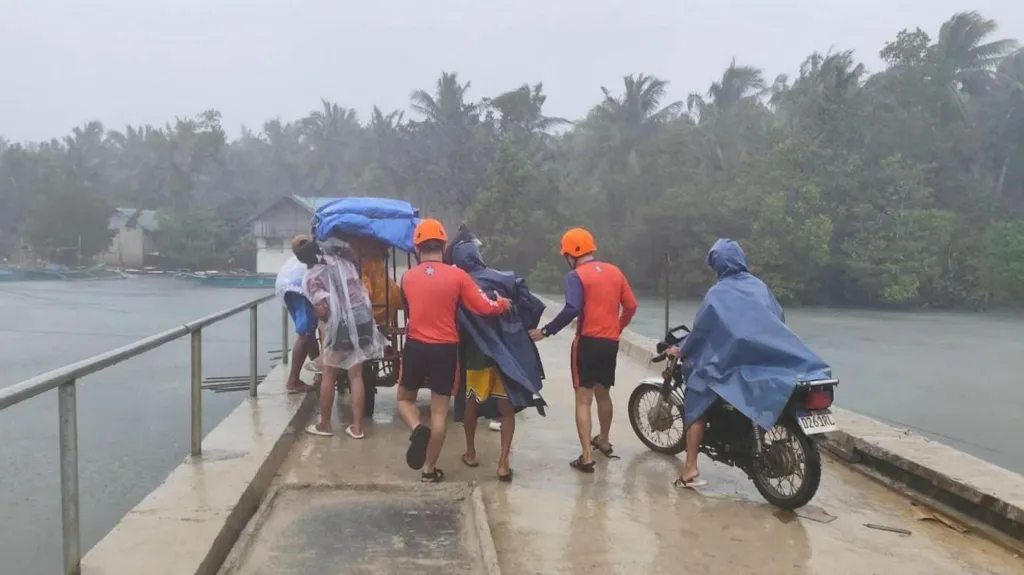
Aurora, Philippines Almost a million people have been evacuated from coastal and low-lying areas across the Philippines as Super Typhoon Fung-Wong, locally known as Uwan, barrels toward the country’s eastern shores. The massive storm one of the strongest this year is forecast to make landfall on Sunday evening, unleashing winds up to 230 km/h (143 mph) and torrential rain across Luzon, the nation’s most populous island.
Authorities have issued the highest level of storm warnings, warning of life-threatening storm surges exceeding three meters (10 feet) and widespread flooding. The country’s meteorological agency (PAGASA) said the storm’s impact could be “catastrophic,” particularly in coastal communities still recovering from Typhoon Kalmaegi, which struck just days earlier and left nearly 200 people dead.
In Bicol region, the first area to face the brunt of the storm, heavy rain and fierce winds began pounding towns early Sunday morning. Residents of Catanduanes island, located directly in Fung-Wong’s path, described “terrifying” conditions as trees were uprooted, roofs were torn off, and power lines were snapped. By the afternoon, the typhoon had moved toward the Polillo Islands, gaining further strength as it headed northwest.
Evacuations on a Massive Scale
Across Luzon’s eastern coast, local governments have mobilized emergency teams and shelters. In the province of Aurora, hundreds of families gathered inside sports complexes and churches converted into evacuation centers. Norlito Dugan, a resident of Sorsogon City, said his family decided to leave their home after seeing floodwaters rise dangerously fast during the previous storm.
“We didn’t want to take any chances this time,” he said. “The waves near our house are already massive.”
Police patrols have gone door to door, urging residents to move inland. The Philippine Coast Guard has suspended all ferry operations, while nearly 300 domestic and international flights have been canceled. Several schools have shifted to online learning, and the government has deployed military units to assist with rescue operations if the storm’s damage escalates.
At seaside hotels in Sabang, workers tied down windows and doors, reinforcing buildings with ropes and wooden planks. Hagunoy, a 21-year-old hotel staff member, said most of the resorts were deserted by Sunday morning.
“We’ve secured everything we can. I’ll stay for a while to guard the property, but I’ll leave before it gets worse,” he told CyberUpto.com.
Deadly Storm Follows Earlier Destruction
Fung-Wong’s arrival comes at a time when the country is still grappling with the aftermath of Typhoon Kalmaegi, one of the deadliest storms to hit the Philippines this year. Kalmaegi’s heavy rains triggered mudslides and flash floods, sweeping away homes and destroying villages in central Luzon and the Visayas region. At least 204 people have been confirmed dead, with more than 100 still missing.
In the aftermath, the government declared a state of calamity nationwide to speed up aid distribution and prepare for new disasters. Emergency funds were released to help provinces reinforce coastal barriers, strengthen power grids, and stockpile food and medicine before Fung-Wong’s landfall.
“Many areas have not yet recovered from Kalmaegi,” said Interior Secretary Benhur Abalos, “and this new storm could compound the tragedy.”
Path and Predictions
Meteorologists predict that Fung-Wong will make its main landfall somewhere between Baler and Casiguran, in northern Aurora province. The storm is expected to weaken slightly as it crosses Luzon but will likely remain a typhoon as it moves toward Taiwan by Tuesday.
Forecast models show that Luzon could receive up to 200mm (8 inches) of rainfall in some regions, with Metro Manila expecting between 100 and 200mm enough to trigger urban flooding and landslides in steep terrain. Emergency crews are on standby, and citizens are urged to stay indoors and monitor advisories from PAGASA.
A Nation on the Front Line of Climate Change
The Philippines, positioned along the Pacific typhoon belt, faces around 20 tropical cyclones every year nearly half of which directly impact the country. Experts say while the number of storms hasn’t increased significantly, climate change has made them far more intense and destructive.
Warmer ocean temperatures provide storms with more energy, leading to stronger winds, heavier rainfall, and higher storm surges. The result: greater devastation in communities already vulnerable due to geography and poverty.
“We’re seeing typhoons grow in strength at an alarming rate,” said meteorologist Lulu Luo. “The storms that used to take days to intensify are now reaching super typhoon levels overnight.”
Still, improved forecasting, better infrastructure, and faster government response have saved thousands of lives compared to a decade ago. Memories of Typhoon Haiyan (2013) which killed over 6,000 people remain a grim reminder of what can happen when preparation falls short.